
The 1938 Gettysburg Reunion
Blue and gray veterans reunite at Gettysburg in 1938. Historians explain why the Civil War matters.
From
The 1938 Gettysburg Reunion
Clip: Episode 1 | 3m 9sVideo has Closed Captions
Blue and gray veterans reunite at Gettysburg in 1938. Historians explain why the Civil War matters.
Why does the Civil War still matter? Historians argue it defined who Americans are, for good and ill, and turned on questions of human dignity and freedom. Begin with 1938 newsreel footage of aging Union and Confederate veterans at Gettysburg, and end with a young Lincoln's warning: "As a nation of free men, we will live forever or die by suicide." From Ken Burns's The Civil War.
From
Problems playing video? | Closed Captioning Feedback
Problems playing video? | Closed Captioning Feedback
Production made possible by grants from General Motors Corporation, National Endowment for the Humanities, Corporation for Public Broadcasting, The Arthur Vining Davis Foundations, John D and Catherine T MacArthur Foundation
The 1938 Gettysburg Reunion
Clip: Episode 1 | 3m 9sVideo has Closed Captions
Why does the Civil War still matter? Historians argue it defined who Americans are, for good and ill, and turned on questions of human dignity and freedom. Begin with 1938 newsreel footage of aging Union and Confederate veterans at Gettysburg, and end with a young Lincoln's warning: "As a nation of free men, we will live forever or die by suicide." From Ken Burns's The Civil War.
From
Problems playing video? | Closed Captioning Feedback
Where to Watch The Civil War
The Civil War is available to stream on pbs.org and the PBS app.
Buy Now
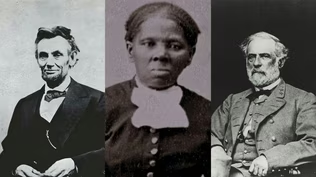
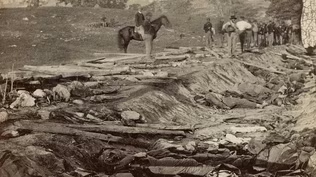
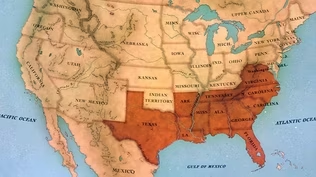

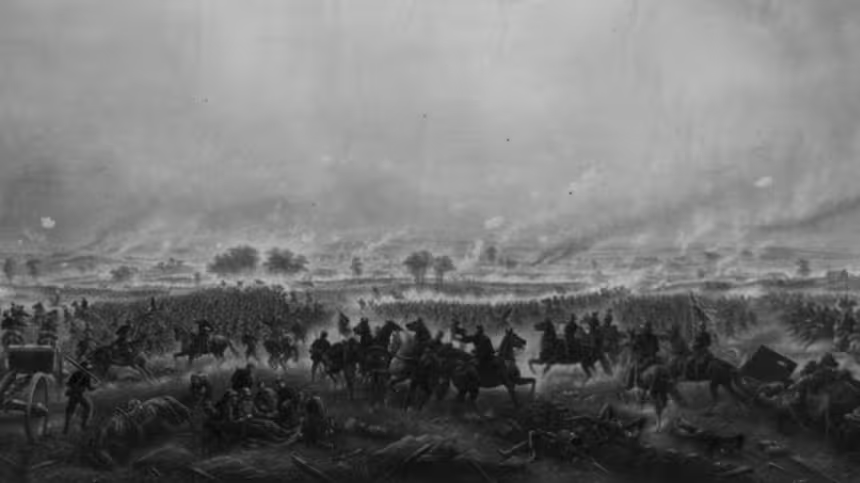
The Civil War | Timeline
Explore a multimedia timeline that is a companion to Ken Burns's acclaimed documentary series, The Civil War. The timeline provides a comprehensive overview of the war, from its political origins to its social and military consequences.Providing Support for PBS.org
Learn Moreabout PBS online sponsorship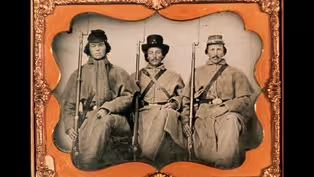
Video has Closed Captions
Clip: Ep1 | 13m 1s | In 1861, volunteers North and South rushed to war. Both sides expected it to last 90 days. (13m 1s)
Video has Closed Captions
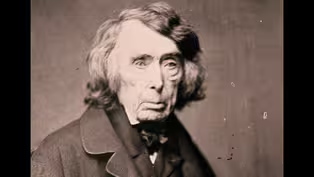
Clip: Ep1 | 3m 16s | "A house divided against itself cannot stand." In the 1850s, slavery pushed the nation toward war. (3m 16s)
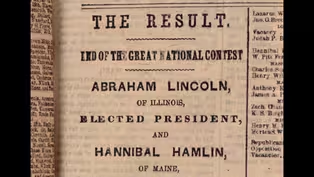
Lincoln's Election and Secession
Video has Closed Captions
Clip: Ep1 | 3m 20s | Lincoln won in 1860 with 40% of the vote. To much of the South, it signaled ruin, and secession. (3m 20s)
Video has Closed Captions
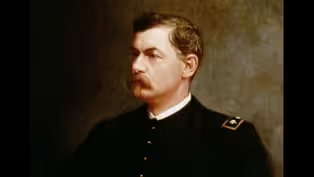
Clip: Ep1 | 3m 27s | After Bull Run, George McClellan built a magnificent Union army. Then he did nothing with it. (3m 27s)
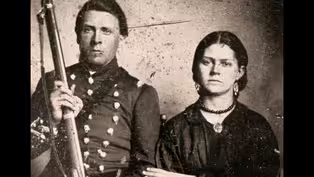
Video has Closed Captions
Clip: Ep1 | 3m 25s | "Sarah, my love for you is deathless." Hear the letter Sullivan Ballou wrote a week before Bull Run. (3m 25s)

Episode 1: The Cause | Introduction
Video has Closed Captions
Clip: Ep1 | 3m 35s | More than 3 million Americans fought. Over 600,000 died. The war changed every life it touched. (3m 35s)
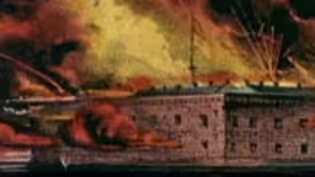
Video has Closed Captions
Clip: Ep1 | 2m 35s | At Fort Sumter, a Confederate general fired on his old West Point teacher. The Civil War began. (2m 35s)
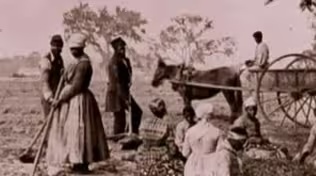
Video has Closed Captions
Clip: Ep1 | 4m 30s | Fewer than 4 in 100 enslaved people lived to 60. Yet they resisted and kept their families together. (4m 30s)
Providing Support for PBS.org
Learn Moreabout PBS online sponsorship






Support for PBS provided by:
Production made possible by grants from General Motors Corporation, National Endowment for the Humanities, Corporation for Public Broadcasting, The Arthur Vining Davis Foundations, John D and Catherine T MacArthur Foundation